
River of Refuge newsletter, July 2026
River of Refuge Welcomes Long-Sought Playground
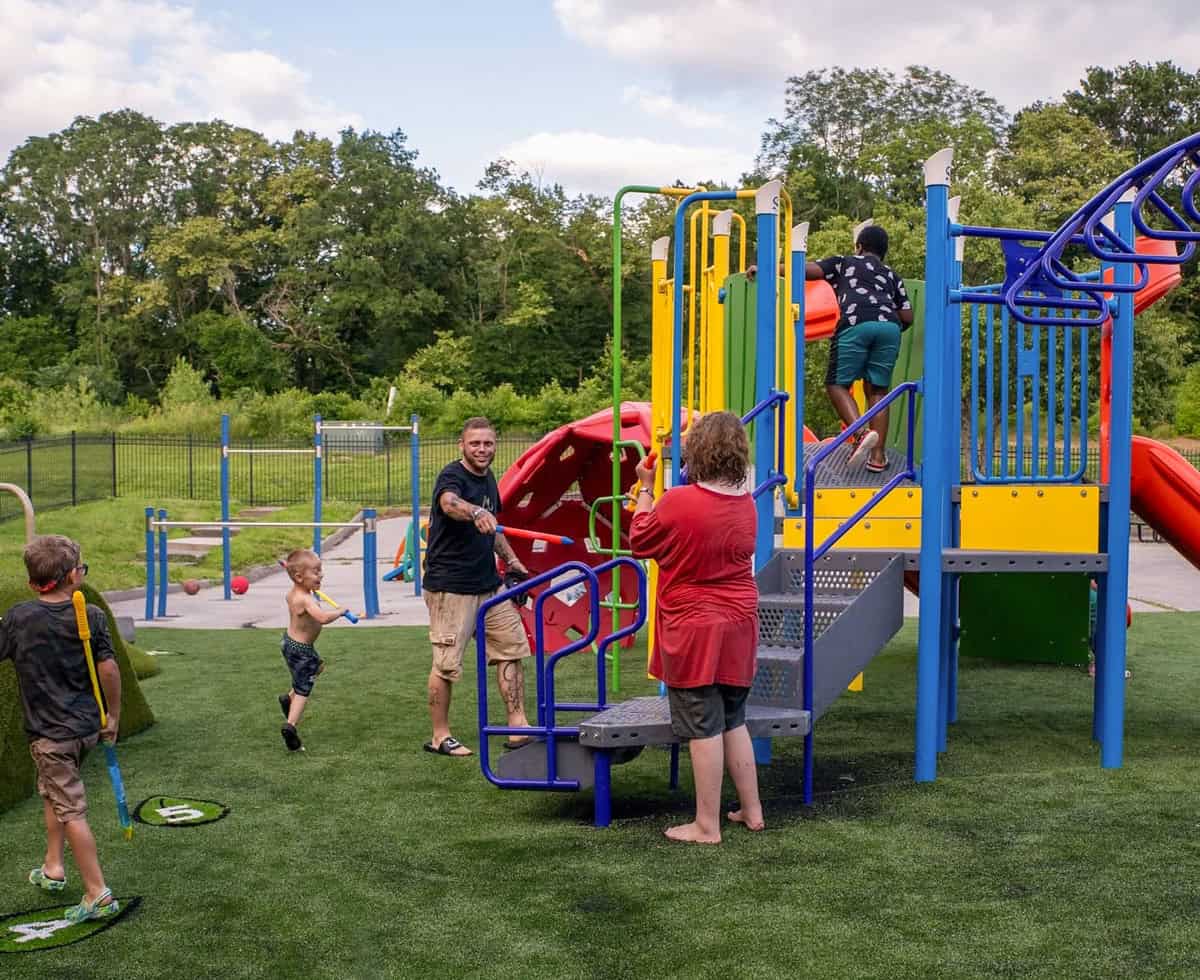
Families and their children enjoyed the new River of Refuge playground at an opening event on June 22.
It’s a dream come true.
There’s no other way to describe River of Refuge’s new playground, which has been on the organization’s wish list since it opened a decade ago.
Situated in a corner of the larger blacktop recreation area, the playground has plenty of places to slide, climb, and run. The equipment sits on cushioned artificial turf.
“Our kids have experienced a lot of trauma, and so they need to be able to just be kids and not holed up in their apartment,” said Executive Director Pam Seymour. “They need to be outside and need to be able to play with other kids.”
The playground opened last month, with a celebration that included current residents, some alumni families, and other guests. Volunteers from a few organizations helped out by providing temporary tattoos, face painting, and balloon art for the kids. They also grilled out and helped clean up.
River of Refuge will hold a more formal grand opening at a later date.
The playground never would have happened without the continued support of Electrical Corporation of America, an electrical contractor based in Raytown, Missouri. ECA has been a stalwart partner since a company worker met River of Refuge representatives in November 2024 at their Giving Tuesday donation event at the Raytown Hy-Vee.
It was ECA that introduced Seymour to an official with ABcreative, a playground design-build firm based in De Soto, Kansas.
“He and a team member came and toured and learned more about our program,” Seymour said, “and he said, ‘I really want to do this, and we’ll make it work.’”
The firm came in under budget and provided in-kind services as well.
“ABcreative was a great company to work with, and we are forever grateful for the introduction and the willingness to work with us given our small budget,” Seymour said. “Their team was professional every step of the way, and we couldn’t be happier with the results.”
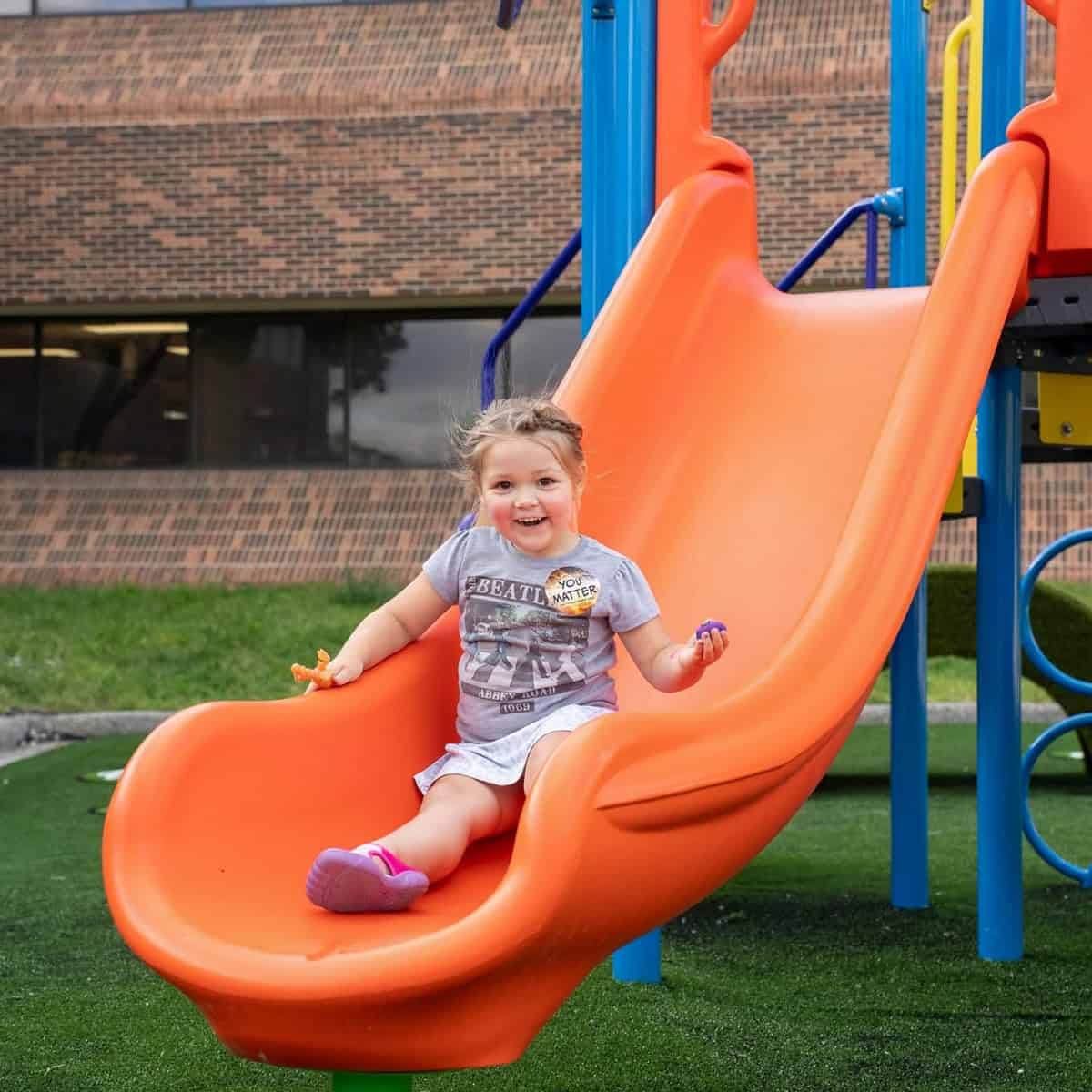
A slide is just one feature of the jungle gym on the new playground.
River of Refuge could expand the turf area at a later date, but the arrangement works well now with some blacktop remaining for basketball, biking, hopscotch, and other pavement games.
Times have changed, and it’s unlikely that we’ll return to the childhood Seymour remembers growing up in small-town Kansas. If it was summer, she was out the door in the morning, home for lunch, and then back out again biking with her girlfriend until it was time for dinner.
Phones, computers, and social media have rendered days like that virtually obsolete. Seymour said the new playground can provide some of that old-school feel.
“There’s something about being outside, and having things to play on, and having things that spark your creativity,” she said. “It’s a huge bonus for the families here.”
World Cup Impact is Limited For River of Refuge
Nothing ventured, nothing gained
River of Refuge thought it might be able to capitalize on its proximity to GEHA Field at Arrowhead Stadium when it hosted World Cup games in June and July. The thinking was that hearty fans might pay to park at River of Refuge and walk the roughly .5 mile to the stadium.
A smattering of takers parked at River of Refuge during the course of the six games, but it did not produce a windfall for the organization. Limited demand prompted Executive Director Pam Seymour to drop the price from $50 to $30.
River of Refuge took a small loss after accounting for costs, which included signage, security, and insurance.
“We tried,” Seymour said, “and it didn’t pan out.”
She sent out kudos to one of River of Refuge’s partners, the Center for Developmentally Disabled, which reported its $60 parking fee had already generated $45,000 for the nonprofit early into the six-game schedule.
Seymour said a park-and-ride option at a nearby church might have captured some potential River of Refuge customers, and she was not sure the World Cup drew as many visitors as organizers projected.
On the plus side, Seymour said budget travellers did not try to squat on River of Refuge’s property, as she feared before the games began.
“We saw an uptick in the use of the trail,” Seymour said, referring to the Rock Island Trail running behind its building. “But we didn’t have anybody wandering around our property. Nobody was camping, none of that.”
FROM THE DIRECTOR
If you want insight into the challenge of finding affordable housing in our area, take a look at some statistics from the city of Kansas City, Missouri.
According to the city, Kansas City is short 64,000 affordable homes, and rent is rising at one of the fastest paces in the country, with a 7% increase since 2024.
The city cited those figures earlier this year when it announced the Kansas City Housing Gateway Program. The program allocates $1 million to affordable housing solutions.
The Housing Gateway Program is just one of the encouraging steps on the affordable housing front in the region.
Another positive development came when earlier this month I attended an open house for a duplex that reStart, a homeless services nonprofit, has built in the Historic Northeast neighborhood.
I am also excited by reStart’s plan to convert a former motel into a 45-unit transitional housing complex, creating much-needed homes in a neighborhood with convenient access to grocery stores, pharmacies, and public transportation.
You can read more about reStart’s projects here.
While the challenge is significant, these efforts demonstrate a growing commitment throughout our community to finding innovative solutions to housing insecurity.
These developments reinforce our vision for transforming the vacant hospital tower connected to our building into affordable apartments for the families we serve.
We have a real affordable housing crisis in our city and across the country. We believe the tower project would provide a critical next step for families as they move from homelessness to long-term stability.
Our current focus is on securing funding for a project cost estimate, an essential first step in moving forward with the redevelopment.
Our long-term vision is to create a seamless pathway for families: completing our transitional housing program and then having the opportunity to move into their own apartment within the redeveloped tower.
Because we continue providing supportive services for two years after graduation, this model would allow families to remain connected to the resources and relationships that help sustain their success.
We remain hopeful that, with increasing awareness of the housing crisis among city and county leaders, we will be able to secure the support needed to bring this vision to life.
Until Next Time,
Pamela Seymour, Executive Director